What Is a Mangaka and How Do Manga Artists Actually Get Paid?
Manga has become a global entertainment phenomenon, attracting readers with everything from action-packed adventures and fantasy worlds to romance, comedy, horror, and everyday stories. Behind these popular series are artists who create the characters, illustrate the scenes, and bring entire fictional worlds to life. In Japan, these creators are commonly known as mangaka.
However, creating a successful manga involves much more than drawing attractive characters. Mangaka often work under demanding deadlines, collaborate with editors and assistants, and navigate a publishing industry where income can vary dramatically from one creator to another.
Some become internationally recognized authors whose works generate revenue through books, anime adaptations, merchandise, and licensing. Others struggle to earn a stable living despite spending countless hours producing their stories.
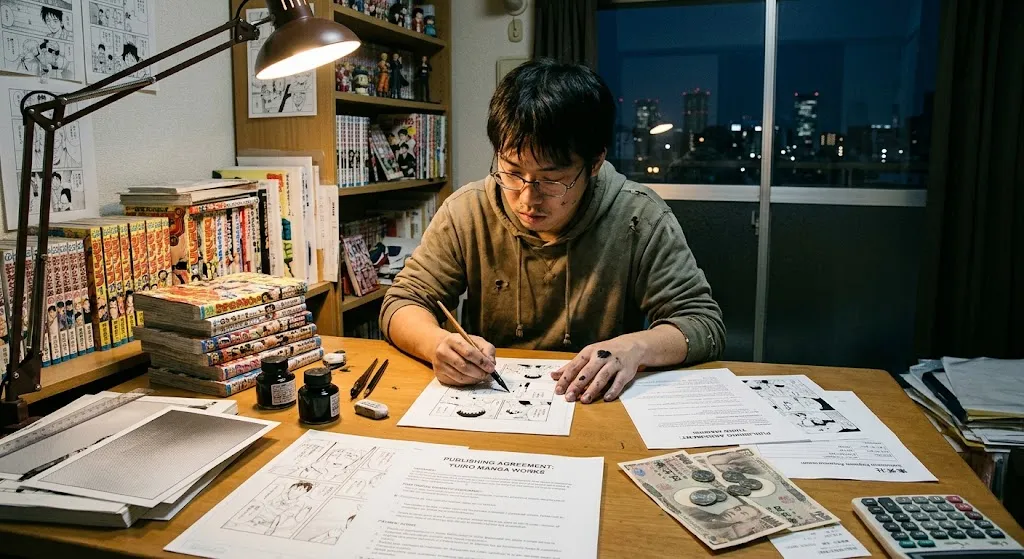
So, what exactly is a mangaka, and how do manga artists actually make money? Understanding the different payment methods reveals why success in the manga industry depends on more than artistic talent alone.
What Is a Mangaka?
A mangaka is a person who creates manga, the Japanese term for comics and graphic storytelling. The word generally refers to manga artists, manga writers, or creators who perform both roles.
Some mangaka write their own stories and illustrate every page. Others specialize primarily in artwork while collaborating with a separate writer or scenario creator.
The work can involve several responsibilities, including:
- Developing story ideas, characters, and fictional settings.
- Writing dialogue and planning the narrative.
- Drawing storyboards, known in Japanese as name.
- Creating character designs and page layouts.
- Producing finished illustrations, backgrounds, and panel details.
- Working with editors to revise and improve the story.
- Meeting publication deadlines and coordinating with assistants.
The amount of work depends on the format and publishing schedule. A weekly manga series can require a particularly demanding production routine, while a monthly series or independently published project may follow a different schedule.
Although manga is often associated with Japan, artists worldwide create manga-inspired comics. However, the term mangaka is most commonly used for creators working in the Japanese manga tradition and publishing industry.
How Does the Manga Publishing Industry Work?
To understand how mangaka get paid, it helps to know how manga reaches readers.
Traditionally, many manga series are first published in magazines or digital magazines. If a series attracts enough interest, its chapters may later be collected into volumes called tankōbon.
Publishers manage distribution, printing, marketing, editorial work, and relationships with retailers or digital platforms. Editors often work closely with mangaka, providing feedback on story development, pacing, artwork, and audience expectations.
Not every manga follows this route. Some creators publish directly through digital platforms, self-publish their work, or build audiences through independent websites and creator-support services.
The publishing arrangement matters because it determines who owns or licenses the work, what payments the artist receives, and how much control the creator has over future uses of the manga.
1. Page Rates: Getting Paid to Draw Manga
One way manga artists earn money is through a payment for each completed page.
Under a page-rate arrangement, a creator receives an agreed amount for producing a page of manga. This may be relevant to commissioned work, certain publishing arrangements, or artists hired to illustrate a story written by someone else.
For example, an artist might agree to produce 20 pages for a fixed fee per page. The total payment would depend on the contractual rate and the number of accepted pages.
However, there is no universal page rate for all mangaka. Payment can depend on the publisher, the creator’s experience, the type of project, the complexity of the artwork, and the terms of the agreement.
It is also important to distinguish a page rate from royalties. A creator paid only a fixed fee may not automatically receive additional income if the manga becomes a bestseller. Whether the artist receives royalties or other payments depends on the contract.
Page-based compensation can provide a more predictable payment for completed work, but it may not reward a creator directly for the long-term commercial success of a series.
2. Manga Royalties: Earning Money From Book Sales
Royalties are one of the most important ways manga creators can earn income from successful publications.
Instead of receiving only a fixed payment for producing pages, a mangaka may receive a percentage of qualifying book sales under the terms of a publishing agreement.
For example, imagine a manga volume sells for ¥600 and the creator’s contract provides a royalty calculated at 10% of the retail price. The illustrative royalty would be ¥60 per copy. If 50,000 copies qualified for that royalty, the amount would be ¥3 million before any applicable deductions or other contractual adjustments.
This is a simplified example, not a standard industry rate. Actual royalty arrangements vary, and some contracts calculate payments using a different base, such as the publisher’s receipts rather than the retail price.
The number of copies sold also matters. A manga that sells several thousand copies may generate a modest amount of royalty income, while a successful series selling hundreds of thousands or millions of copies can generate substantially more.
However, royalties do not necessarily represent the creator’s entire income. Artists may have to cover business expenses, pay assistants, or share earnings with collaborators, depending on their working arrangements.
3. Advances and Guaranteed Payments
Some publishing contracts include an advance or another guaranteed payment.
An advance is money paid before all the royalties associated with a publication have been earned. Depending on the contract, it is generally recouped against future royalties rather than being an additional payment on top of them.
For instance, suppose a publisher pays a creator a ¥500,000 advance against royalties. If the creator subsequently earns ¥700,000 in royalties covered by that advance, the creator would generally receive the remaining ¥200,000 after the advance has been recouped.
The precise accounting depends on the agreement, including which works and payments are covered.
Not every mangaka receives an advance. Established creators, newcomers, freelance illustrators, and independently published artists can have very different contractual arrangements.
For a creator who receives an advance, the payment can provide some financial support while the work is being produced or released. However, it should not automatically be interpreted as a guaranteed additional bonus.
4. Serialization Payments From Manga Magazines
Many manga series appear chapter by chapter in magazines or digital publications before being collected into book volumes.
In some publishing arrangements, mangaka receive compensation for each serialized page or chapter. This provides income while the series is being published, potentially before book royalties become significant.
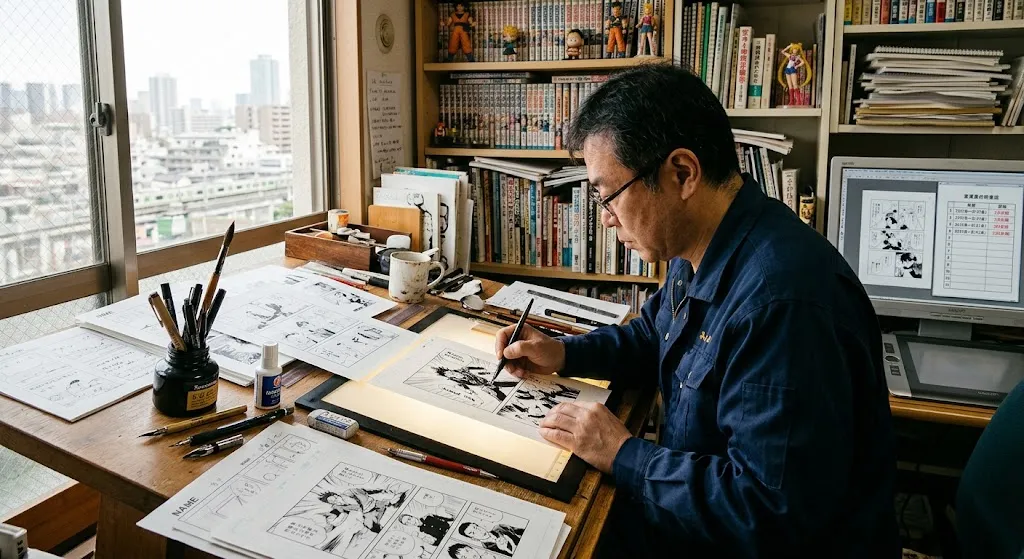
The payment structure depends on the publisher and contract. Serialization compensation may be separate from royalties, or it may form part of a broader arrangement governing the creator’s work.
Serialization can also help a manga build an audience. Readers who enjoy the chapters may later purchase collected volumes, digital editions, or related products.
However, publication in a magazine does not guarantee long-term success. If a series fails to attract sufficient readership, the publisher may decide to end it earlier than the creator had hoped.
For mangaka, serialization can therefore offer both an opportunity to reach a large audience and the pressure to maintain a consistent publishing schedule.
5. Digital Manga Sales and Online Publishing
Digital publishing has created additional ways for manga artists to distribute their work and earn money.
Instead of relying exclusively on printed magazines and physical volumes, creators may publish through digital manga stores, subscription platforms, webcomic services, or their own websites.
Depending on the platform and agreement, income can come from individual chapter purchases, digital volume sales, subscriptions, licensing payments, or revenue-sharing arrangements.
Digital distribution can make manga accessible to readers in multiple countries without requiring every edition to be physically printed and shipped.
It can also give independent creators more opportunities to find audiences. Some artists publish short comics or complete series online before pursuing a traditional publishing contract.
Nevertheless, digital publication does not automatically produce substantial income. Platform fees, revenue-sharing rules, discoverability, marketing expenses, and audience size all affect how much a creator earns.
Artists should also check whether a platform requires exclusive distribution rights or imposes restrictions on where else the work can be published.
6. Anime Adaptations: Can Mangaka Earn Money From Anime?
One of the most exciting possibilities for a successful manga creator is an anime adaptation.
When a manga becomes popular, a production committee or other rights holder may arrange to adapt it into an animated television series, film, or another format.
An anime adaptation can introduce the original story to a much larger audience, increasing interest in the manga and potentially boosting book and digital sales.
But there is an important distinction: an anime adaptation does not automatically mean the mangaka receives a large share of the anime’s profits.
The creator’s compensation depends on the rights they own, the licenses granted, and the agreements negotiated with publishers and other parties.
Possible arrangements include an adaptation license fee or other contractual payments. Some creators may have additional participation rights, while others may receive limited direct compensation from the adaptation itself.
The original manga’s publisher may hold certain rights or act as an intermediary in negotiations. The anime production may also involve studios, broadcasters, distributors, music companies, and other stakeholders.
Consequently, a successful anime can substantially increase the commercial value of a manga without the creator necessarily receiving a proportionate share of the anime’s revenue.
The most important factor is the contractual arrangement governing the original work and its adaptation rights.
7. Merchandise, Licensing, and Other Revenue Streams
Popular manga can expand into a wide range of products and media.
Characters and stories may appear on figurines, clothing, stationery, games, posters, collectible items, and other merchandise. A series may also be licensed for international publication, live-action adaptations, or video games.
These activities can create additional revenue for the parties that own or license the relevant rights.
Mangaka may receive licensing fees, royalties, or other payments when their contracts provide for such compensation. However, they do not necessarily receive a percentage of every product sold using their characters.
The rights involved can be complex. The publisher, creator, production company, or another rights holder may control different aspects of the intellectual property.
For this reason, a manga artist’s ability to earn from merchandise depends not only on how popular the characters become but also on who controls the relevant commercial rights.
A creator who retains or negotiates favorable rights may have more opportunities to benefit from the success of their intellectual property over time.
8. How Much Do Mangaka Actually Earn?
There is no single salary for a mangaka. Earnings range from occasional income from small independent projects to substantial earnings from internationally successful franchises.
A creator’s financial position depends on several factors:
- The number of pages or chapters produced.
- Compensation for serialized work.
- Royalties from physical and digital sales.
- The popularity and longevity of the series.
- Contractual advances and other guaranteed payments.
- Licensing and adaptation agreements.
- The cost of assistants, equipment, workspace, and other expenses.
It is also important to distinguish gross revenue from personal income.
A manga artist might receive a substantial payment from a publisher but still have significant production expenses. Some creators hire assistants to help with backgrounds, screen tones, finishing work, and other tasks. The artist may also need to pay taxes and cover business-related costs.
For example, a creator who earns ¥4 million in gross annual manga income does not necessarily take home ¥4 million. The final amount depends on expenses, taxes, contractual obligations, and the creator’s personal circumstances.
Income can also fluctuate from year to year. A serialized artist may earn regular payments during one period, followed by lower income while developing a new project or waiting for publication.
Established creators with several successful works may benefit from a more diversified income stream, while beginners often face greater uncertainty.
9. Why Are Manga Artists Often Under Pressure?
Manga is a creative profession, but it can involve demanding working conditions.
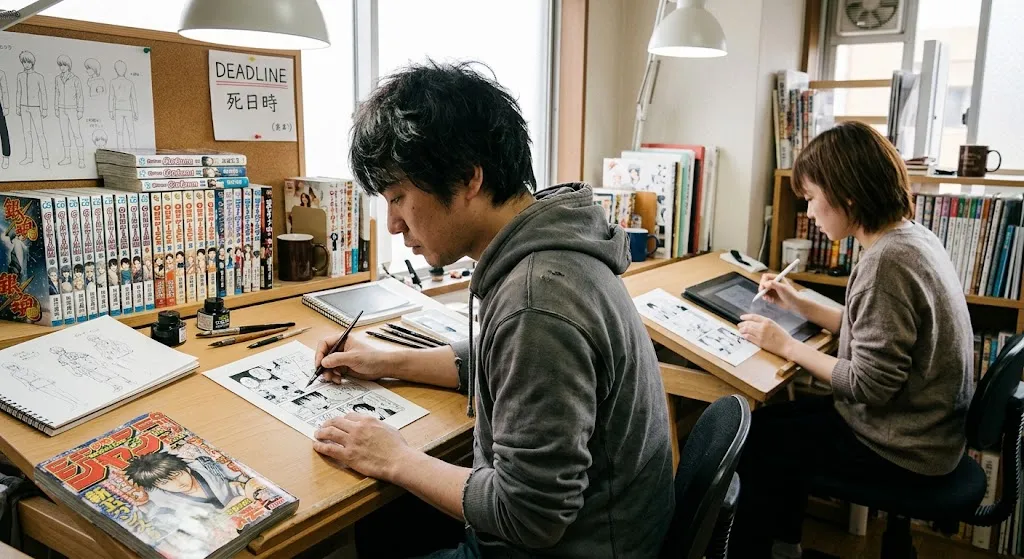
Weekly serialization schedules may require artists to produce many finished pages within a short period. The process can involve story planning, pencil sketches, inking, backgrounds, corrections, and communication with editors.
Some creators work late hours to meet deadlines. Others rely on assistants or adjust their publication schedules to manage the workload.
Financial pressure can make these demands harder to manage. A creator may feel compelled to keep producing chapters because regular publication supports income and helps maintain readership.
The challenges are not identical for every mangaka. Monthly serialization, independent publishing, digital-first projects, and other arrangements may provide different levels of flexibility.
Nevertheless, the combination of artistic responsibility, tight deadlines, and uncertain earnings can make manga creation a difficult career, even for talented artists.
10. How Do New Manga Artists Get Started?
Aspiring mangaka usually need to develop both their artistic skills and their understanding of storytelling.
There is no single route into the profession, but several approaches can help beginners build experience and demonstrate their abilities.
Develop a portfolio. Create original characters, short comics, finished pages, and complete stories that demonstrate drawing ability, panel composition, pacing, and narrative skills.
Study manga storytelling. Read different genres and examine how experienced creators communicate movement, emotion, dialogue, and action through panels.
Create short, complete works. A well-structured one-shot can demonstrate storytelling ability without requiring a long-running series.
Research publishers and submission guidelines. Some publishers accept submissions or run competitions for new creators. Requirements and opportunities vary, so check official guidelines.
Consider digital publishing. Online platforms can help creators share work, develop an audience, and receive feedback. Review the platform’s rights and payment terms before publishing.
Learn the business side. Understand publishing contracts, royalties, copyright, licensing, taxes, and production expenses. Artistic success is only one part of building a sustainable career.
Some creators also collaborate with writers or work as assistants to established mangaka. These experiences can provide practical knowledge of professional workflows, although they do not guarantee a future publishing contract.
11. Who Owns a Manga: The Artist or the Publisher?
Copyright ownership is a major issue because it affects who can authorize adaptations, merchandise, translations, and other commercial uses.
The answer depends on the applicable law and the agreements governing the work.
In many circumstances, creators initially hold copyright in their original artistic and literary work, subject to applicable legal rules. However, publishing contracts may grant publishers important rights, and other arrangements can affect ownership or licensing.
A mangaka might retain copyright while granting a publisher the right to publish and distribute the series. Another agreement may provide broader rights to the publisher or another company.
Collaborative works can be more complicated when a writer, illustrator, and other contributors have separate contractual responsibilities.
Before signing a publishing agreement, creators should understand:
- Which rights they retain.
- Which rights they grant or transfer.
- Whether the license is exclusive.
- How long the agreement lasts.
- Which territories and languages are covered.
- How adaptation and merchandise rights are handled.
- How royalties are calculated and reported.
- What happens when the agreement ends.
Independent legal advice can help creators understand these terms and avoid assumptions about future earnings.
Final Thoughts
A mangaka is much more than an illustrator. Manga creators combine storytelling, visual design, and disciplined production to create works that can entertain millions of readers.
Their income, however, depends on how their work is published and which rights they retain. Page rates, serialization payments, advances, royalties, digital sales, and licensing can all play a role, but not every creator receives every type of payment.
The biggest commercial success stories often involve more than book sales alone. Anime adaptations, international distribution, merchandise, and long-running popularity can expand a manga’s reach, although the financial benefits depend on contractual rights and revenue-sharing arrangements.
For aspiring artists, understanding the business behind manga is just as important as improving their drawing skills. A sustainable career requires creative ability, consistent work, realistic financial planning, and a clear understanding of publishing agreements.
Ultimately, manga can offer an opportunity to turn original stories into a professional career, but its financial rewards are neither automatic nor equal for every creator.
Frequently Asked Questions (FAQ)
A mangaka is a creator of manga, the Japanese term for comics. Mangaka may write stories, illustrate them, or handle both tasks.
Mangaka can earn money through page rates, serialization payments, book royalties, advances, digital sales, and licensing agreements.
Earnings vary widely depending on popularity, publishing contracts, sales, and production expenses. Successful creators may earn substantial income, while beginners often face financial uncertainty.
They may receive adaptation fees or other payments, depending on their contracts and rights. An anime adaptation does not automatically guarantee a share of the production’s profits.
Some mangaka receive royalties based on book sales, but the rates and calculation methods depend on their publishing agreements.
Yes. Independent creators can earn income through digital publishing, direct sales, subscriptions, commissions, and other platforms, depending on their audience and business model.
Copyright ownership depends on applicable law and contractual agreements. A creator may retain copyright while granting a publisher specific rights to publish or distribute the work.