What Does ‘NTR’ Mean in Doujinshi and Manga?
NTR (Netorare) is one of the most searched and controversial terms in doujinshi and manga culture.
If you have spent any time exploring manga, anime fan communities, or doujinshi culture, you have almost certainly encountered the term NTR. It appears in genre tags, fan discussions, content warnings, and community debates with enough frequency that it has become one of the most recognized and most polarizing labels in the fan-created content space. Yet for newcomers and even for people who have been adjacent to these communities for a while, the term can remain confusing, especially because it carries different meanings depending on the context in which it appears.
This article explains what NTR means, where the term comes from, how it functions as a storytelling genre, why it generates such strong reactions, and how it fits into the broader landscape of doujinshi and manga culture.
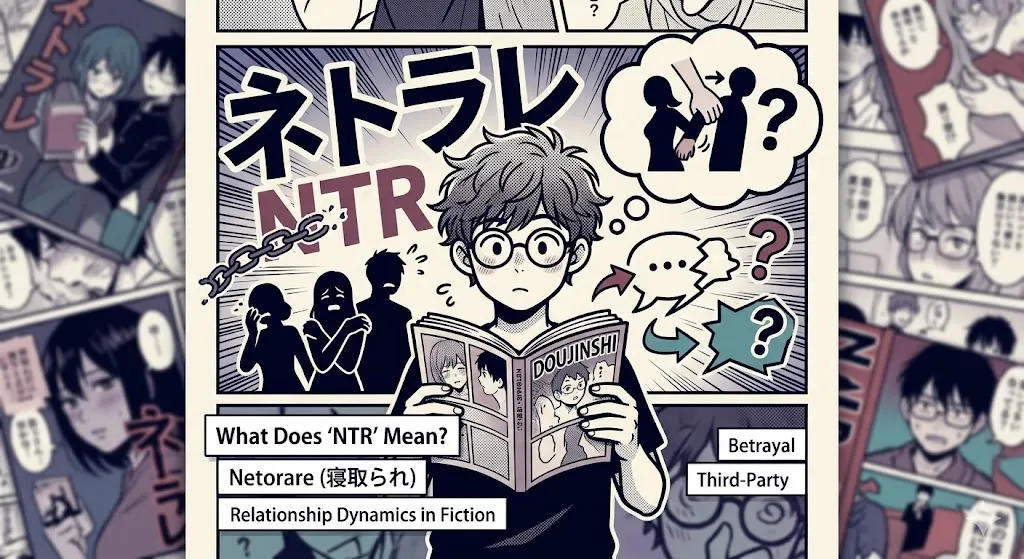
NTR (Netorare) is a manga/doujinshi genre where a character’s romantic partner is taken away by another person, focusing on emotional themes like jealousy and betrayal.
The Basic Definition
NTR stands for Netorare, a Japanese word that translates most directly into English as something being taken from you or having something stolen. In the context of manga and doujinshi, it refers to a genre or narrative scenario in which a character, typically one in a romantic or committed relationship, is stolen away from or becomes romantically or sexually involved with another person, usually without the original partner’s consent and often with an emphasis on the emotional experience of the partner who is left behind.
The word itself comes from the Japanese verb netoru, which means to steal someone away romantically or to cuckold. The ra and re ending creates a passive construction, meaning the experience of being the one something is taken from rather than the one doing the taking. That grammatical distinction is actually meaningful in terms of how the genre is understood, because NTR specifically centers the emotional perspective of loss rather than the act of taking.
Where the Term Comes From
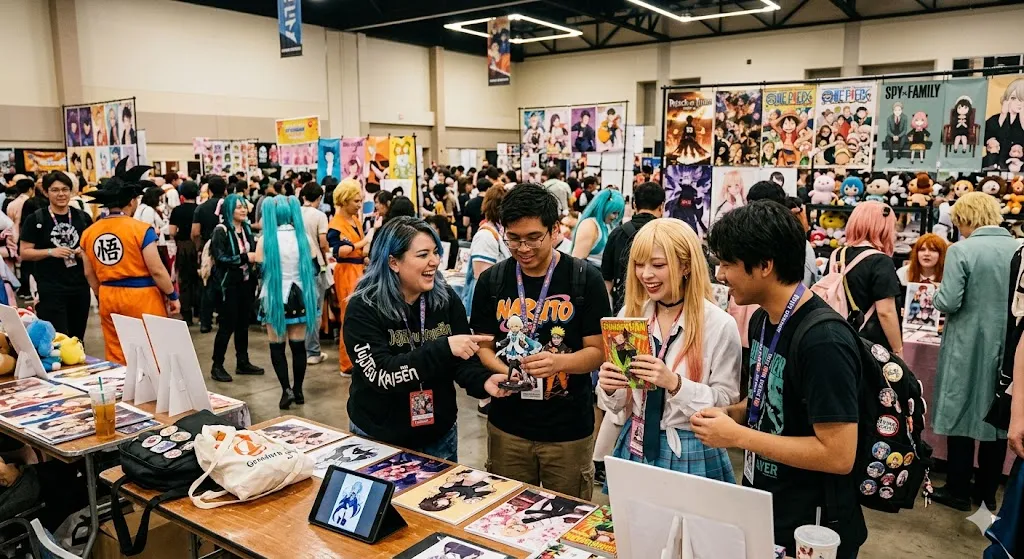
The term NTR and the genre conventions associated with it developed within Japanese popular culture, particularly within the doujinshi scene and the broader world of adult manga and visual novels. Doujinshi are self-published fan works, often but not exclusively adult in nature, created by amateur and semi-professional artists working independently or in small circles. They are sold at events like Comiket in Japan and have been a significant part of manga fan culture since the 1970s.
Within doujinshi culture, genre tags developed as a practical way for creators to communicate content to potential readers so they could make informed choices about what they purchased or read. NTR emerged as one of these tags to describe a specific type of emotional and narrative scenario that had developed a recognizable enough shape to warrant its own label.
The genre has roots in older storytelling traditions around jealousy, betrayal, and romantic loss, but in doujinshi culture it developed particular conventions and tropes that made it identifiable as a distinct category. Over time, NTR content moved beyond doujinshi into mainstream manga, visual novels, and anime, where it appears with varying degrees of explicitness depending on the platform and target audience.
The Core Narrative Structure of NTR
Understanding NTR as a genre requires understanding its characteristic narrative structure. While specific stories vary enormously, certain elements appear consistently enough to be considered defining features.
The established relationship. NTR stories typically begin with an established romantic connection between two characters, often a couple with a meaningful history or emotional bond. This established relationship is important because it provides the emotional stakes for what follows. Without a pre-existing connection to be disrupted, the defining element of loss and theft has nothing to operate on.
The intrusion. A third party enters the picture. This character, sometimes called the netori character or the rival, pursues or begins a relationship with one member of the established pair. How this intrusion happens varies widely across individual stories. Sometimes it is aggressive and predatory. Sometimes it involves manipulation or deception. Sometimes the pursued character is initially resistant and eventually worn down. Sometimes they are willing from the beginning.
The betrayal or loss. The emotional core of NTR is the moment of betrayal or loss experienced by the character who is left behind, sometimes called the netorare character. This is the character from whose perspective the genre takes its name. Whether that character is aware of what is happening, discovers it gradually, or is kept ignorant varies by story, and that variation significantly changes the emotional texture of the narrative.
The emotional aftermath. NTR stories frequently spend considerable time on the emotional consequences of the betrayal or loss. The feelings of the character who has been left behind, humiliated, or deceived are often central to the genre’s appeal for its audience, which brings up the complicated question of why people read NTR at all.
The Different Types of NTR
Within communities that discuss and create this content, NTR is not treated as a single monolithic genre. Several subcategories and related terms have developed to describe variations in how the narrative unfolds and who the emotional focal point is.
Netorare (NTR). The classic form, focused on the perspective of the character who loses their partner. The emotional emphasis is on loss, jealousy, and the painful experience of betrayal. This is the version most people mean when they use the term NTR without qualification.
Netori. A related but distinct scenario that flips the perspective. In netori, the focal character is the one doing the taking rather than the one experiencing loss. The narrative centers on the experience of pursuing and winning someone away from their existing partner. Some communities treat netori as a separate genre from NTR proper because the emotional experience it delivers is fundamentally different.
Netorase. A variation in which the partner who is being pursued is shared or offered by the other partner, sometimes voluntarily or with an element of consensual arrangement. This version introduces complexity around consent and agency that distinguishes it from the more straightforwardly non-consensual scenarios in traditional NTR.
NTL (Netorare Light). Some communities use this term to describe softer versions of the scenario where the betrayal or loss is less extreme, the emotional content is less harsh, or the story ends in a way that resolves the conflict rather than leaving the wounded character in a state of permanent loss.
These subcategories reflect the fact that communities engaging seriously with this genre have developed nuanced vocabulary to distinguish between meaningfully different emotional and narrative experiences that might otherwise be grouped under the same label.
Why NTR Generates Such Strong Reactions
Few genres in manga and doujinshi culture generate the intensity of reaction that NTR does. Readers who enjoy it tend to engage with it with considerable enthusiasm. Readers who dislike it tend to dislike it intensely. And the debate between these groups is a persistent feature of online communities where manga and doujinshi are discussed.
Understanding why requires thinking about what NTR is actually doing emotionally and why that produces such different responses in different readers.
For readers who engage with it positively, NTR offers access to a specific emotional experience that combines jealousy, loss, and romantic intensity in a way that few other genres provide. Some readers describe the appeal in terms of the intensity of feeling the genre produces, including negative feelings like jealousy and humiliation that are unpleasant in real life but can be engaging to experience at a safe remove through fiction. This is not unique to NTR. Horror fiction operates on similar principles, giving readers access to fear and dread in a controlled context. Tragedy as a storytelling form has been valued for thousands of years precisely because it allows audiences to engage with grief and loss through narrative.
For readers who react negatively, NTR often produces genuine distress, particularly when it involves characters they are already emotionally invested in through prior engagement with the source material. Doujinshi frequently uses characters from existing manga, anime, and games, and NTR doujinshi involving beloved characters can feel like a violation of those characters and the relationships associated with them. The feelings this produces are real even though the content is fictional.
The intensity of both reactions reflects the fact that NTR is specifically designed to produce strong emotional responses. It is a genre built around feelings that are already powerful in real life. When it succeeds on its own terms, it produces those feelings effectively, and whether that reads as a feature or a flaw depends almost entirely on whether the reader is the kind of person who wants to engage with those feelings through fiction.
NTR in Doujinshi Culture Specifically
In the doujinshi context, NTR has a particular significance because doujinshi operates in the space between existing characters and fan imagination. A large proportion of NTR doujinshi involves taking established characters from popular manga, anime, and games and placing them in NTR scenarios.
This practice sits at the intersection of fan creativity and what many fans experience as disrespect toward characters they love. The debates within doujinshi communities about NTR are therefore not just debates about genre preferences. They are debates about what fan creativity is for, what obligations fan creators have toward source material and its audiences, and where the line is between legitimate creative exploration and content that primarily exists to distress.
These debates have no clean resolution because doujinshi culture has always included content that pushes against the preferences of portions of the fanbase. The same creative freedom that allows fans to imagine alternative stories, relationships, and outcomes for characters they love also allows other fans to imagine scenarios that the first group finds upsetting. NTR is a sharp example of this tension, but it is not the only one.
What distinguishes NTR somewhat from other controversial doujinshi genres is the specificity of its emotional target. It is not just depicting characters in scenarios that differ from canon. It is specifically depicting scenarios designed to produce the emotional experience of loss and betrayal in the reader, and when the reader is already emotionally attached to the characters involved, that targeting can feel more pointed than other forms of fan content that simply differ from canon preferences.
NTR in Mainstream Manga
While NTR is most frequently discussed in the context of doujinshi and adult fan content, elements of NTR appear in mainstream manga as well, often in a non-explicit form that focuses on the emotional dynamics rather than any physical content.
Romance manga has a long tradition of love triangle narratives, rival characters, and scenarios where an established relationship is threatened by a third party. These are not typically labeled as NTR, and they differ in important ways from what the NTR genre label usually implies. Mainstream romance manga generally resolves these tensions in ways that affirm the primary relationship or provide satisfying emotional closure. True NTR, in the genre sense, tends to be characterized by outcomes that are more ambiguous or painful.
However, some mainstream manga has explored NTR-adjacent territory with more directness. Stories that center on infidelity, the emotional aftermath of betrayal, or the experience of losing a romantic partner to someone else can share thematic DNA with the NTR genre even when they are not labeled as such and even when they approach the material from a more literary angle.
The presence of these themes in mainstream manga is a reminder that the emotional territory NTR explores is not inherently niche or transgressive. Jealousy, betrayal, and romantic loss are universal human experiences that literature and storytelling have engaged with across every culture and throughout history. NTR as a genre label represents a specific and often explicit version of this territory, but the territory itself is not unusual.
The Question of Perspective and Emotional Identification
One of the more interesting aspects of NTR as a genre is the question of who the reader is supposed to identify with and how that identification shapes the emotional experience.
In classic netorare, the intended focal perspective is typically the character who is left behind, the one experiencing loss. The genre’s name literally encodes this perspective. But readers do not always experience fiction from the perspective the creator intends, and NTR readers report identifying with different characters in ways that produce very different emotional experiences from the same content.
Some readers identify with the character who is being left behind and experience the genre primarily as an exploration of jealousy and loss. Some identify with the character being pursued and experience the genre as a story about desire and temptation. Some maintain an external perspective and experience the genre more analytically as a study of human behavior under emotional pressure.
These different modes of engagement help explain why the same content can produce such different reactions even among people who are broadly willing to engage with the genre. The emotional experience of NTR is not fixed by the content itself. It is shaped significantly by how the individual reader approaches and processes it.
Content Warnings and Community Norms
Within communities where doujinshi and fan manga are shared and discussed, NTR functions as an important content warning as well as a genre label. This dual function reflects the intensity of reactions the content can produce.
Platforms, communities, and individual creators who share or sell NTR content typically apply the label prominently so that readers who do not want to encounter this type of content can avoid it. This is treated as a basic courtesy norm in most communities that take content labeling seriously. The logic is similar to content warnings for other emotionally intense material. Even if you believe the content is legitimate and has a valid audience, the courtesy of labeling it allows people who do not want that experience to opt out.
The failure to label NTR content appropriately is a recognized source of conflict in fan communities. When NTR scenarios appear without warning in content that readers approached expecting something different, the reaction is often strongly negative, not just because of the content itself but because of the violation of the implicit social contract around content labeling.
This community norm around labeling is actually one of the more functional aspects of how NTR is handled in mature fan communities. It allows the content to exist for its intended audience while giving those who would find it distressing the ability to avoid it.
NTR and the Broader Conversation About Dark Themes in Fiction
The existence and popularity of NTR raises questions that go beyond the specific genre and touch on broader debates about the role of dark, uncomfortable, or morally complex content in fiction generally.
There is a long-standing argument in literary culture that fiction serves important purposes precisely by allowing readers to engage with experiences, emotions, and scenarios that are difficult, painful, or morally complicated in real life. Reading about loss, betrayal, jealousy, and moral failure in fiction can build empathy, process emotions, and provide a safe container for experiences that would be damaging in reality.
NTR sits within this argument, though in a part of the fiction landscape that is often excluded from more elevated discussions of literature and its purposes. The emotional experiences NTR engages with are real and recognizable. The genre simply packages them in a form that is explicit, often sexual, and deliberately provocative in ways that make it easy to dismiss or condemn without engaging with the underlying question of what it is doing for its audience.
The honest position is that fiction engaging with dark emotional territory serves legitimate purposes for some readers and is not appropriate for others, and that both of these things can be true simultaneously. The appropriate response is not blanket condemnation or blanket defense but rather the kind of nuanced engagement that treats readers as adults capable of making their own choices about what they consume while also taking seriously the question of context, consent to content, and the importance of accurate labeling.
How NTR Relates to Real Emotional Experiences
Part of what makes NTR a durable genre rather than a passing trend is that it draws on emotional experiences that are genuinely universal. Jealousy, the fear of losing a partner, the pain of betrayal, and the disorienting experience of a relationship being disrupted by an outside force are things that a very large proportion of people have experienced in some form.
Fiction that engages directly with these experiences, even in stylized or explicit forms, connects with something real in its audience. For some readers, NTR content provides a way of processing or engaging with jealousy and insecurity in a context where those feelings cannot cause real harm. For others it is simply a form of emotional intensity that they find engaging in the same way that other readers seek out horror or tragedy.
For others still, the connection to real emotional experiences is precisely what makes NTR content difficult to engage with. Readers who have experienced real betrayal or loss in relationships may find NTR content retraumatizing rather than cathartic, and that response is equally valid.
Misconceptions About NTR and Its Audience
Several persistent misconceptions about NTR and the people who engage with it are worth addressing directly.
The assumption that NTR fans endorse the behavior depicted. This is a fundamental confusion between fiction and reality that applies to many dark genres but gets applied to NTR with particular frequency. Enjoying a story about betrayal does not indicate that the reader endorses betrayal in real relationships any more than enjoying crime fiction indicates that the reader endorses crime.
The assumption that NTR is exclusively adult content. While a significant portion of NTR content is explicit, the emotional scenario it describes can appear in non-explicit manga, romance fiction, and mainstream storytelling. NTR as a label in fan communities often does signal adult content, but the underlying narrative structure has a much broader presence.
The assumption that NTR has no legitimate artistic merit. Like any genre, NTR contains work that ranges from thoughtfully crafted emotional storytelling to content that is purely formulaic or gratuitous. Dismissing the entire genre as without merit ignores the fact that some work within it engages seriously with complex emotional territory.
The assumption that disliking NTR is a simple matter of preference. For some readers, particularly those who encounter NTR content involving characters they are deeply attached to, the negative reaction goes beyond preference and into something more like genuine distress. That response deserves to be taken seriously rather than dismissed as oversensitivity.
Navigating NTR as a New Reader
For someone new to manga and doujinshi communities who is trying to understand NTR well enough to navigate it intelligently, a few practical points are worth keeping in mind.
Genre tags in doujinshi communities are there to help you. NTR is consistently labeled in communities that take content tagging seriously, so learning to read tags before engaging with content is the most effective way to encounter what you want and avoid what you do not.
Understanding the subcategories, particularly the distinction between netorare, netori, and netorase, gives you more precision in understanding what a specific piece of content is likely to deliver emotionally. These distinctions matter if you are trying to understand what you are engaging with or what to avoid.
Community discussions about NTR can be heated, and the intensity of those discussions reflects the intensity of the emotional responses the genre produces. Reading those discussions with some awareness of why people feel strongly, rather than treating strong reactions as simply irrational, gives a more accurate picture of how the genre sits within fan culture.
Final Thoughts
NTR is a genre label with a specific meaning, a consistent set of narrative conventions, and a complicated relationship with the fan communities where it exists. Understanding it requires understanding both the emotional territory it engages with and the cultural context in which it developed.
It is a genre that produces strong reactions because it is designed to engage with strong emotions. Those reactions, whether enthusiasm, discomfort, or active distress, are not irrational. They reflect the fact that jealousy, betrayal, and romantic loss are genuinely powerful emotional experiences, and fiction that engages directly with them will always produce responses that feel more personal than genres built around more distant or fantastical content.
Whether NTR is something you choose to engage with, avoid entirely, or simply understand well enough to navigate fan communities more effectively, having an accurate understanding of what the term means and what the genre does is more useful than either dismissing it without engagement or approaching it without context.
Fan culture, like all creative culture, contains multitudes. NTR is one part of that picture, and understanding it clearly contributes to a more complete understanding of the landscape it inhabits.
Key Takeaways
- NTR stands for Netorare, a Japanese term meaning to have something stolen from you romantically, and functions as both a genre label and a content warning in manga and doujinshi communities.
- The genre centers on the emotional experience of loss and betrayal within a romantic relationship, distinguishing it from related terms like netori, which focuses on the perspective of the one doing the taking, and netorase, which involves a consensual sharing element.
- NTR developed within Japanese doujinshi culture as a practical content tag and has since expanded into mainstream manga, visual novels, and anime in varying degrees of explicitness.
- The genre produces unusually strong reactions in readers because it deliberately engages with emotions, particularly jealousy, betrayal, and romantic loss, that are already powerful in real life and feel more personal than the subject matter of many other fiction genres.
- Within doujinshi communities, NTR frequently involves established characters from existing manga, anime, and games, which intensifies both its appeal for some readers and its distressing effect on others who are already emotionally attached to those characters.
- Content labeling norms around NTR are considered an important community courtesy, allowing readers who want to engage with the genre to find it while giving those who would find it distressing the ability to avoid it effectively.
- Enjoying NTR as fiction does not indicate that a reader endorses the behavior depicted in real life, a distinction that applies to dark fiction broadly but is worth stating clearly given how frequently the misconception appears in community discussions.
- The emotional territory NTR engages with, including jealousy, infidelity, and romantic betrayal, is universal in human experience and appears across literary traditions globally, though the NTR genre label represents a specific and often explicit version of that territory.
- Subcategory distinctions within NTR, including netorare, netori, netorase, and NTL, reflect meaningful differences in narrative perspective and emotional experience that communities engaging seriously with the genre have developed precise vocabulary to describe.
- Reader identification in NTR is not fixed by the content itself. Different readers identify with different characters, producing meaningfully different emotional experiences from the same material.
Frequently Asked Questions
NTR stands for Netorare, a Japanese word pronounced neh-toh-rah-reh. The term comes from the Japanese verb netoru, meaning to steal someone away romantically, combined with a passive grammatical construction that shifts the meaning to the experience of being the one something is taken from. In English-speaking fan communities, it is almost always referred to by its abbreviation rather than the full Japanese word.
Not necessarily. While the NTR label in doujinshi communities frequently signals adult content, the underlying narrative structure of NTR, an established relationship disrupted by a third party with an emphasis on the emotional experience of loss, appears in non-explicit manga, mainstream romance stories, and literary fiction as well. The label itself tends to indicate explicit content in fan community contexts, but the emotional scenario it describes has a much broader presence across storytelling generally.
The distinction is partly about framing and partly about outcome. Mainstream manga often features love triangles, rival characters, and relationship threats, but these narratives typically resolve in ways that affirm the primary relationship or provide satisfying emotional closure. NTR as a genre tends to be defined by outcomes that are more ambiguous, more painful, or more focused on the experience of loss itself rather than its resolution. NTR also places specific emphasis on the emotional perspective of the character who is left behind, which is not always the case in mainstream romantic conflict narratives.
When NTR doujinshi uses characters from existing manga, anime, or games, readers who are emotionally attached to those characters and their canonical relationships often experience the content as something closer to a violation than a simple difference in creative preference. The emotional investment built through the original source material does not switch off when encountering fan content, which means NTR scenarios involving beloved characters can produce genuine distress rather than simply aesthetic disagreement. This is why content labeling matters particularly in doujinshi communities where source material characters are commonly used.
No. This is one of the most common misconceptions about NTR audiences and it reflects a broader confusion between fictional engagement and real-world endorsement that applies to many dark or morally complex genres. People who enjoy horror fiction are not endorsing violence. People who enjoy crime thrillers are not endorsing criminal behavior. Similarly, readers who engage with NTR content are engaging with a fictional emotional experience, not expressing a preference for how real relationships should work. The appeal for many readers lies precisely in the safety of experiencing intense emotions like jealousy and loss within a fictional context where they cannot cause real harm.
In most mature fan communities and doujinshi platforms, NTR is tagged consistently enough that learning to read content tags before engaging with material is the most reliable method. On platforms like nhentai, Dynasty Reader, and similar sites, NTR appears as a searchable and filterable tag that can often be actively excluded from search results. In community spaces like Reddit and Discord servers dedicated to specific fandoms, becoming familiar with how content warnings are applied in that specific community gives you the best practical ability to navigate around content you want to avoid.
Yes. The term NTL, sometimes used to mean Netorare Light, describes softer versions of the scenario where the emotional content is less harsh, the betrayal is less extreme, or the story resolves in a way that provides more closure or even reconciliation. Some stories also explore NTR-adjacent scenarios where the wounded character ultimately moves forward in a way that feels empowering rather than purely painful. These variations exist because there is genuine demand within the audience for the emotional intensity of the NTR setup without the bleakest possible outcomes.
The global spread of NTR as a recognized genre label followed the broader international growth of manga, anime, and doujinshi fandom through the internet. As fan communities developed online spaces for sharing, discussing, and accessing doujinshi content, the vocabulary that Japanese fan communities had developed, including NTR and its subcategories, traveled with that content into English-speaking and other international communities. The term is now widely recognized across fan communities globally, even among readers who have no particular interest in the genre itself, simply because it appears frequently enough in content tags and community discussions that basic familiarity with its meaning has become part of general manga fandom literacy.
References & Further Reading
The following sources provide additional context on the topics covered in this article, including Japanese popular culture, doujinshi history, fan communities, and the broader academic conversation around dark themes in fiction and their relationship to reader psychology.
Doujinshi & Japanese Fan Culture
- Kinsella, S. (1998). Amateur Manga Subculture and the Otaku Panic. Journal of Japanese Studies, 24(2), 289–316. One of the earliest and most widely cited academic examinations of doujinshi culture in English, covering the history of self-published fan works in Japan and the communities that developed around them.
- Galbraith, P. W. (2009). The Otaku Encyclopedia: An Insider’s Guide to the Subculture of Cool Japan. Kodansha International. A practical reference covering key terms, genres, and cultural concepts within Japanese fan culture, including the vocabulary used to describe and categorize doujinshi content.
- Lam, F. M. (2010). Comic Market: How the World’s Biggest Amateur Comic Fair Shaped Japanese Dōjinshi Culture. Mechademia, 5(1), 232–248. An academic examination of Comiket and its role in shaping the norms, economics, and creative culture of doujinshi production and distribution in Japan.
Manga & Anime Studies
- Brenner, R. E. (2007). Understanding Manga and Anime. Libraries Unlimited. A broad introductory resource covering manga genres, storytelling conventions, and the cultural context in which different types of manga content developed and found their audiences.
- Napier, S. J. (2005). Anime from Akira to Howl’s Moving Castle: Experiencing Contemporary Japanese Animation. Palgrave Macmillan. While focused primarily on anime, this widely referenced academic work provides valuable cultural and historical context for understanding how Japanese popular media genres develop and travel internationally.
Fan Communities & Fan Fiction Studies
- Jenkins, H. (1992). Textual Poachers: Television Fans and Participatory Culture. Routledge. A foundational academic text on fan creativity and the relationship between fan communities and source material, relevant to understanding how and why fans create content that departs significantly from canonical relationships and narratives.
- Busse, K., & Hellekson, K. (Eds.). (2006). Fan Fiction and Fan Communities in the Age of the Internet. McFarland. An academic collection examining how online communities have shaped fan creativity, content norms, and the social dynamics around fan-produced material including content that engages with dark or controversial themes.
Psychology of Dark Fiction & Emotional Engagement
- Oatley, K. (2011). Such Stuff as Dreams: The Psychology of Fiction. Wiley-Blackwell. A research-based examination of why people engage with fiction emotionally and what psychological purposes dark, uncomfortable, or morally complex narratives serve for readers.
- Mar, R. A., & Oatley, K. (2008). The Function of Fiction is the Abstraction and Simulation of Social Experience. Perspectives on Psychological Science, 3(3), 173–192. An academic paper exploring how fiction allows readers to process emotional and social experiences at a safe remove, directly relevant to understanding why genres built around negative emotions like jealousy and loss find genuine audiences.
Online Resources
- TV Tropes – Netorare Genre – tvtropes.org A community-maintained resource that documents storytelling conventions, tropes, and genre characteristics across manga, anime, games, and other media. The TV Tropes entry on netorare provides a useful overview of recurring narrative patterns and their variations across different works.
- Academic journal Mechademia – mechademia.net A peer-reviewed academic journal dedicated to the study of anime, manga, and Japanese popular culture, with a searchable archive of articles covering genre studies, fan culture, and the cultural contexts in which Japanese popular media develops and circulates internationally.
The sources listed above are provided for educational and contextual purposes. This article is intended as an informational overview of a genre label and its cultural context within manga and doujinshi communities.
Disclaimer
This article is intended strictly for informational and educational purposes. Its sole aim is to explain the meaning, cultural origin, and narrative conventions of a genre label that appears frequently in manga, doujinshi, and anime fan communities, so that readers can navigate those communities and their content with greater understanding and clarity.
This article does not promote, endorse, recommend, or encourage engagement with any specific type of content. It does not advocate for or against any particular genre, creative work, or community practice. All references to mature themes are discussed in an analytical and descriptive context only, with the goal of providing accurate cultural and contextual information to readers seeking to understand terminology they have encountered.
The content discussed in this article is intended for adult readers only. If you are under the age of 18, this article is not intended for you, and you are encouraged to navigate away.
Readers are reminded that all fictional content discussed exists within the context of creative works and fan-produced media. Discussion of themes within fiction does not constitute endorsement of those themes in real life, and nothing in this article should be interpreted as normalizing, encouraging, or validating harmful behavior in real relationships or real-world contexts.
If you have concerns about content you have encountered online, resources are available through internet safety organizations and mental health support services in your region.
Tsumino-blog.com publishes this article as part of its commitment to providing accurate, honest, and contextually responsible information on topics that readers are actively searching for and deserve to understand clearly.