What Is a “Tantou” (Manga Editor) and How Much Power Do They Have Over a Series?
When fans discuss their favorite manga, they usually focus on the mangaka, the creator responsible for the story and artwork. However, behind many successful Japanese manga series is another important figure who can influence everything from character development and plot structure to publication schedules and the future of the series itself: the tantou, or editor in charge.
In the manga industry, the relationship between a creator and their editor can be much more involved than simply correcting mistakes or preparing pages for publication. Editors often serve as creative advisers, project managers, critical readers, and intermediaries between artists, publishers, and audiences.
But how much power does a tantou really have? Can an editor change a protagonist, reject a major plot twist, or influence whether a manga continues or gets cancelled? The answer reveals an important part of how manga is created and published in Japan.
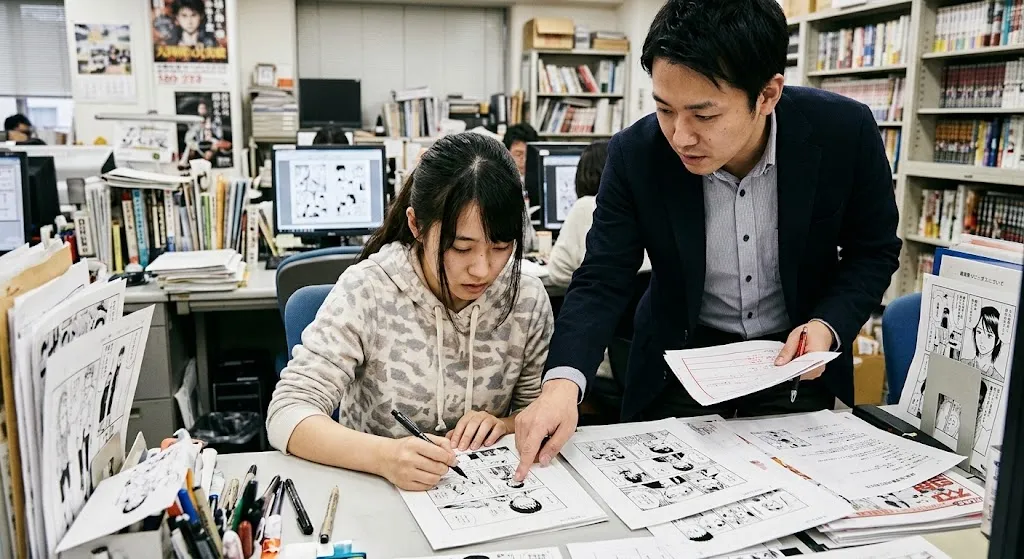
What Does “Tantou” Mean in the Manga Industry?
The Japanese word tantou (担当) generally means the person responsible for a particular assignment or area of work. In manga publishing, a tantou editor is the editor assigned to work with a specific manga creator or series.
Rather than operating as a distant proofreader, this editor often maintains an ongoing working relationship with the mangaka. They review story ideas, discuss drafts, provide feedback, coordinate deadlines, and help prepare the work for publication.
The precise responsibilities depend on the publisher, magazine, creator, and stage of production. Some editors are heavily involved in developing stories, while others concentrate more on production, communication, and publication logistics.
At major publishers such as Shueisha, which publishes Weekly Shonen Jump, editors can also help discover new talent and guide creators through the process of developing a one-shot manga into a serialized work.
The role is therefore both practical and creative. A good editor must understand the creator’s intentions while also considering what readers might find engaging and what the publisher needs from the series.
What Does a Manga Editor Actually Do?
A tantou can influence a manga at several different stages, from the original concept to its ongoing publication.
1. Helping Develop the Story
An editor may discuss the initial premise with a mangaka, identify weaknesses in the plot, and suggest ways to make the story more compelling.
For example, an editor might ask whether the protagonist’s goal is clear enough, whether the opening chapter introduces the central conflict too slowly, or whether a supporting character needs a stronger motivation.
These questions may lead the creator to revise the story significantly. Sometimes, an editor’s suggestion can even help transform an ordinary concept into a distinctive series.
However, editors do not necessarily invent the story themselves. Their job is generally to help the creator develop and communicate the strongest version of their own idea.
2. Influencing Characters and Relationships
Character development is another area in which an editor can have considerable influence.
An editor might recommend giving a protagonist a clearer weakness, making a rival more interesting, strengthening the relationship between two characters, or delaying a romantic development until it feels emotionally convincing.
They may also question whether a character’s behavior fits what readers already know about them.
For example, if a character suddenly betrays a close friend, the editor might ask whether the decision has been properly established or whether the change feels too abrupt.
These discussions can influence the direction of a series without the editor directly writing the character.
The final result depends on the working relationship. Some mangaka welcome detailed suggestions, while others prefer to retain greater independence over their characters.
3. Reviewing Storyboards and Chapter Pacing
Before a manga chapter reaches its finished artwork, the creator commonly prepares a rough storyboard, known as a name in Japanese manga production.
This stage allows the editor to assess the sequence of events, dialogue, panel composition, pacing, and dramatic impact before the creator invests time in completing the pages.
An editor might recommend shortening a conversation, moving an important revelation to the end of a chapter, clarifying an action sequence, or giving a significant emotional moment more space.
In a weekly magazine, these decisions can be especially important because each chapter must work as part of the larger story while also giving readers a reason to return the following week.
A strong editor can therefore affect how suspenseful, readable, or emotionally effective a chapter becomes.
4. Managing Deadlines and Publication
A manga editor’s responsibilities extend beyond creative feedback.
They may coordinate manuscript delivery, communicate with the editorial department, review finished pages, and help ensure that a chapter is ready for publication on schedule.
This side of the job is particularly demanding for weekly series, where production deadlines leave little room for delays.
Editors may also help creators navigate promotional activities, collected-volume releases, and discussions surrounding adaptations or other commercial opportunities, depending on their position and the publisher’s arrangements.
In practice, the tantou often acts as the main link between the creator and the publishing organization.
How Much Power Does a Tantou Have Over a Manga Series?
The most accurate answer is that a manga editor can have substantial influence without necessarily having the final creative authority.
It helps to distinguish between three different kinds of power.
Creative influence
An editor can suggest changes to the plot, characters, dialogue, pacing, and overall structure. If the creator trusts the editor’s judgment, these recommendations may shape the series considerably.
Over months or years of collaboration, the editor may become one of the people who understands the story’s strengths and weaknesses best.
Publishing influence
An editor also works within a publishing organization. Their recommendations can affect how a series is developed, presented, promoted, and evaluated internally.
An editor who believes strongly in a new creator may advocate for a project, help it progress toward serialization, or argue for its continued development.
However, one editor’s opinion does not automatically determine every publishing decision. Other editors, senior staff, business considerations, and reader response may also matter.
Commercial influence
In a magazine-driven environment, audience reception and commercial performance can influence a series’ future.
For example, Weekly Shonen Jump has historically placed considerable importance on reader surveys and editorial decisions when determining which series continue. A creator may receive strong guidance from their editor while also facing pressure to make the manga more appealing to its intended audience.
This means that an editor’s power is partly institutional. They do not simply express a personal opinion; they may communicate expectations and decisions that affect the creator’s professional future.
Can a Manga Editor Force a Creator to Change the Story?
Not necessarily.
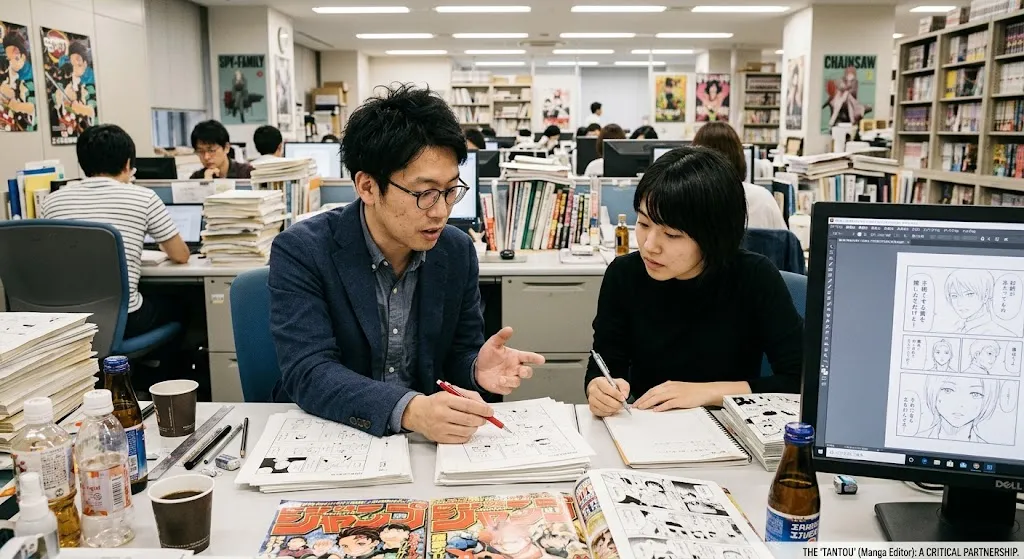
An editor can strongly recommend changes, explain why a particular development may not work, or communicate that the publisher has concerns about a manuscript. In some situations, the creator may feel considerable pressure to accept those recommendations.
Nevertheless, it would be misleading to assume that every editor can simply order a mangaka to rewrite any part of a series.
The degree of influence varies. A new creator seeking their first serialization may depend heavily on an editor’s support. An established mangaka with a successful track record may have greater bargaining power and more freedom to reject suggestions.
Some editors prefer to offer detailed instructions, while others focus on asking questions and helping the creator reach their own conclusions.
The relationship also depends on mutual trust. A creator may accept a challenging criticism because they believe the editor understands the story, not because they consider the editor the person who owns the creative vision.
In other words, an editor’s influence is often strongest when the creator voluntarily takes their advice seriously.
Can an Editor Change the Ending of a Manga?
Endings are among the most sensitive aspects of long-running manga because they determine how readers understand the entire story.
An editor might question whether the ending resolves the central conflict, whether a character’s fate feels justified, or whether the conclusion matches the themes established earlier.
They may also discuss pacing, the amount of space available for the final chapters, or whether the proposed conclusion can be delivered within the publisher’s schedule.
Commercial circumstances can complicate these discussions. A series that remains popular may face different expectations from one that is struggling to maintain readership.
However, the claim that an editor always decides how a manga ends is an oversimplification. The creator’s intentions, contractual arrangements, publishing decisions, and practical production constraints can all play a role.
Without reliable statements from the people involved, it is difficult to determine exactly how much responsibility an editor had for a particular ending.
The distinction matters: an editor may influence the process substantially without being the person who originally conceived the conclusion.
Why Are Some Manga Editors So Famous?
A small number of manga editors have become well known among fans because of their involvement with successful creators and recognizable series.
Shihei Lin, for example, has been associated with major works including Chainsaw Man and SPY x FAMILY. His interviews offer insight into how editors help creators develop their work and maintain a productive professional relationship.
In the manga industry, editors can become influential because they recognize promising ideas, understand audience expectations, and help creators refine their storytelling.
Their experience can be particularly valuable when working with emerging artists who have strong artistic abilities but are still learning how to construct compelling serialized narratives.
However, an editor’s reputation should not be confused with sole responsibility for a series’ success. The mangaka’s creativity, the work of assistants, the publisher’s support, timing, and reader response all contribute to the outcome.
A celebrated editor may help a creator realize an idea, but the creator’s own talent remains central to the work.
Does the Editor Own the Manga?
Generally, the editor is not automatically the owner of the manga simply because they helped develop it.
Copyright and ownership arrangements depend on the applicable law, contracts, and circumstances surrounding the work. In Japanese commercial manga, the mangaka is ordinarily recognized as the creator, while the publisher may hold particular contractual rights relating to publication and exploitation.
An editor’s substantial creative contribution does not, by itself, establish that they own the series.
This is an important distinction because creative influence, professional authority, and legal ownership are three separate things.
An editor may help shape a character or recommend a major plot development without becoming the person legally entitled to control the underlying work.
What Happens When a Mangaka Gets a New Editor?
A change of editor can affect the working atmosphere and the way a series develops.
A new tantou may have different preferences, offer different kinds of feedback, or approach storytelling from another perspective. They may identify weaknesses that the previous editor overlooked, or they may encourage the creator to explore ideas that were not previously considered.
For a creator who has worked with one editor for years, such a change can require an adjustment period. The previous editor may have developed a detailed understanding of the series’ characters, long-term plans, and creative priorities.
At the same time, a new editor does not automatically mean that the story will change dramatically. Some creators already have a clear direction and need relatively little creative intervention.
Ultimately, the effect depends on the individual personalities involved and the degree to which the creator relies on editorial feedback.
Is a Manga Editor a Creative Partner or a Boss?
In many cases, the answer is a little of both, although neither description captures the entire relationship.
As a creative partner, the editor offers an outside perspective, identifies potential problems, and helps turn an idea into a finished work that readers can enjoy.
As a representative of the publisher, the editor also operates within a commercial system shaped by deadlines, budgets, audience expectations, and decisions about which works receive continued support.
These responsibilities can sometimes conflict. A creator may want to develop a slow, carefully constructed storyline, while the publisher may prefer a faster pace or a stronger hook at the end of each chapter.
A skilled editor must navigate these tensions without losing sight of what makes the manga distinctive.
The best working relationships are not necessarily those in which the editor has the most control. They are often those in which the editor can challenge the creator honestly while preserving the creator’s individual voice.
Final Thoughts
The tantou is one of the most important figures behind the scenes of Japanese manga publishing. Depending on the series and the working relationship, an editor can influence its initial concept, character development, pacing, publication strategy, and even its prospects for continued serialization.
Yet influence is not the same as absolute control. The editor works within a relationship involving the mangaka, the publisher, and the audience, with each playing a different role in the series’ development.
For manga fans, understanding this relationship adds another layer to appreciating a favorite work. The story may carry the mangaka’s name, but its journey from an initial idea to a published series can involve years of discussion, criticism, negotiation, and collaboration.
A great tantou does not simply tell a creator what to draw. At their best, they help the creator see what the story could become while allowing it to remain unmistakably their own.